
The Hezbollah-Israel War has Totally Reshaped Hezbollah’s power inside Lebanon
Updated: Apr 24

By: Tony Boulos
For years, Hezbollah relied on a governing equation built on coercion: accept its weapons and its role above the authority of the Lebanese state—or face internal unrest and the threat of civil conflict. Over time, this formula evolved from a pressure tactic into a structural instrument of control, activated whenever the state moved toward sovereign decisions that challenged the group’s dominance inside Lebanon.
This dynamic became unmistakably clear in 2008, when the Lebanese government attempted to restore part of its security authority. The response came swiftly on May 7, when Hezbollah and its allies militarily took over Beirut and imposed a new political reality by force, re-establishing the supremacy of arms over state institutions.
That moment marked more than a domestic security incident. It signaled that any attempt to build a functioning sovereign state in Lebanon would be confronted directly if it conflicted with Hezbollah’s regional role. From that point forward, weapons were no longer merely part of an internal balance of power. They became the foundation of a permanent political equation: Lebanon was no longer operating as an independent decision-making state, but as part of a regional axis led by Tehran.
Today, however, the strategic environment surrounding Lebanon has fundamentally changed. For the first time in years, the Lebanese state has begun taking direct sovereign steps that affect the core of this equation itself. Hezbollah has been internationally designated—at least in its military wing—as an illegal organization, while the Lebanese government has gradually started reasserting its role in security and military decision-making. At the same time, Beirut has entered a negotiating track with Israel under U.S. sponsorship—an issue long treated by Hezbollah as a political red line.
It is within this context that renewed references to a possible “new May 7” began to surface. The same warning returned: either the state accepts that Hezbollah is above the law, above the state, or Lebanon faces internal escalation. The big difference though, the conditions that once allowed such a scenario to succeed no longer exist.
A Transformed Regional Environment
In May 2008, Hezbollah was not acting in isolation. It operated within a regional system at the height of its strategic reach. Iran was expanding its influence following the fall of Saddam Hussein’s regime in Iraq and consolidating a regional corridor stretching from Baghdad to Damascus to Beirut. At the same time, the Syrian regime functioned as Hezbollah’s direct strategic depth inside Lebanon, while networks of Syrian influence embedded during decades of Syrian dominance continued to operate effectively across Lebanese political and security institutions.
On the domestic front, the March 14 coalition and other sovereign forces were unable to get an advantage over Hezbollah and its stranglehold on power. This was not only the result of limited political leverage, but also of major miscalculations—most notably the quadripartite alliance** that brought some of these forces into coordination with Hezbollah and the rival Shia Amal Movement. That arrangement weakened the sovereign front internally and created space for Hezbollah to reorganize the political landscape following May 7. The result was the consolidation of a one-color government and the marginalization of opposition forces at the time, with the exception of Druze leader Walid Jumblatt.
Today, the regional balance looks markedly different. Iran is no longer operating from the position of strength it held in 2008. Instead, it finds itself in a strategic grey zone between confrontation and temporary understandings with the United States, with the risk of renewed escalation present. Recent Israeli strikes have directly targeted key components of Iran’s regional proxy architecture in Lebanon, Yemen, Gaza and Iraq, reducing Tehran’s ability to manage this network at previous levels of influence.
The most consequential transformation, however, occurred in Syria. The collapse of the previous regime and the emergence of a new authority openly hostile to Iran and its regional axis represented a major strategic setback for Tehran’s Levantine project. It also disrupted one of Hezbollah’s most important political and logistical supply routes, which had been central to its regional positioning for decades.
Beyond these, another decisive factor has altered the internal balance of power inside Lebanon itself: Israel’s recent war against Hezbollah. The campaign did not merely target military infrastructure along the southern front. It struck core layers of the party’s command structure and strategic leadership—figures and operational networks that shaped Hezbollah’s long-term internal posture for decades. As a result, the organization has entered a defensive phase that, in practical terms, has pushed its strategic capacity back by nearly two to three decades.
This degradation significantly reduces Hezbollah’s ability to replicate the coordinated domestic takeover scenario witnessed on May 7, 2008. Unlike previously —when the party could move internally while enjoying secure regional depth and uninterrupted command continuity—it now operates under sustained Israeli military pressure that constrains both its operational freedom and its ability to initiate a large-scale internal escalation inside Lebanon. This alone represents a structural change in the balance of power that did not exist in 2008.
The Iranian–American Negotiation Track
Equally significant is a second development: the Lebanese state’s attempt to separate itself from the Iranian negotiation track with Washington.
For years, Hezbollah worked to position Lebanon as part of the broader Iranian–American framework. Under this arrangement, escalation or de-escalation on the Lebanese front mirrored developments between Tehran and Washington. Lebanon therefore functioned less as a sovereign actor and more as a forward arena within a wider regional bargaining structure.
Today, Beirut is attempting to break this linkage. The negotiation track launched between Lebanon and Israel under American sponsorship is not connected to Iranian–American talks. Instead, it represents an effort to separate the Lebanese file from the Iranian file altogether, which explains a central dimension of Hezbollah’s political response. The success of such separation would directly undermine the party’s regional function as a bridge between Lebanon and Tehran.
From this perspective, renewed political escalation and references to a May 7 scenario reflect more than domestic tensions. Hezbollah’s concern is not negotiation itself, but negotiation conducted independently of Iranian strategic decision-making.
Hezbollah has never functioned solely as a Lebanese armed organization. It is structurally integrated into the Iranian Revolutionary Guard system and operates within a regional strategy that treats Lebanon as an advanced arena of Iranian influence rather than a fully sovereign national space. Within this framework, the party has long sought to anchor Lebanon as a political and security outpost aligned directly with Tehran rather than with Lebanese constitutional institutions.
Yet this model is increasingly difficult to sustain. Lebanese public opinion has shifted significantly after years of economic collapse and the consequences of Hezbollah’s involvement in regional conflicts—from Syria to Gaza to open confrontation with Israel. The dual-authority model of state institutions alongside independent armed power is no longer as politically viable domestically as it once was.
Opposition to Hezbollah’s weapons is not a recent phenomenon. Its roots extend back to the Taif Agreement itself, when all Lebanese militias surrendered their arms to the state except one: Hezbollah. That exception—granted through political arrangements linked to Syrian influence and justified at the time under the banner of “resistance”—later became one of the structural foundations of Lebanon’s prolonged institutional crisis.
A Convergence of Domestic and International Pressures
Today, this longstanding internal opposition to Hezbollah’s weapons intersects with wider regional and international transformations. Israel increasingly views Iran’s strategy as an attempt to encircle it through Hamas in the south, Hezbollah in the north, and affiliated armed networks across the region. The United States similarly considers Hezbollah and Iran central components of a broader architecture of instability in the Middle East.
The exposure of cells linked to Hezbollah in Kuwait, the United Arab Emirates, Qatar, and other Gulf states has reinforced the perception that Iran’s regional strategy extends beyond local resistance narratives and instead reflects a wider geopolitical influence project aimed at reshaping regional balances.
Against this backdrop, any attempt to reproduce a May 7 scenario inside Lebanon would face structural limits. Hezbollah still retains significant military capabilities and continues to benefit from alliances within parts of Lebanon’s entrenched political and economic patronage networks. However, the broader balance of power no longer supports the re-creation of the 2008 model.
Regional cover has weakened. Domestic acceptance has declined. International tolerance has narrowed. Most importantly, the Lebanese state has begun to assert its independence fro the Iranian axis.
For all these reasons, despite rising rhetoric and political pressure, the conditions that once enabled a May 7-style outcome no longer exist. The internal balance of power has shifted, the regional environment has transformed, and Hezbollah’s strategic capacity has been significantly degraded by sustained military pressure.
The “quadripartite alliance” refers to the electoral pact formed during Lebanon’s 2005 parliamentary elections between the Future Movement, Walid Jumblatt’s Progressive Socialist Party, Hezbollah, and the Amal Movement. Intended to stabilize the post-Syrian withdrawal landscape and maximize electoral gains, the arrangement allowed Hezbollah and Amal to secure uncontested dominance in Shiite constituencies while blurring political lines between opposing camps—later viewed by many March 14 figures as a strategic miscalculation that strengthened Hezbollah’s long-term position.
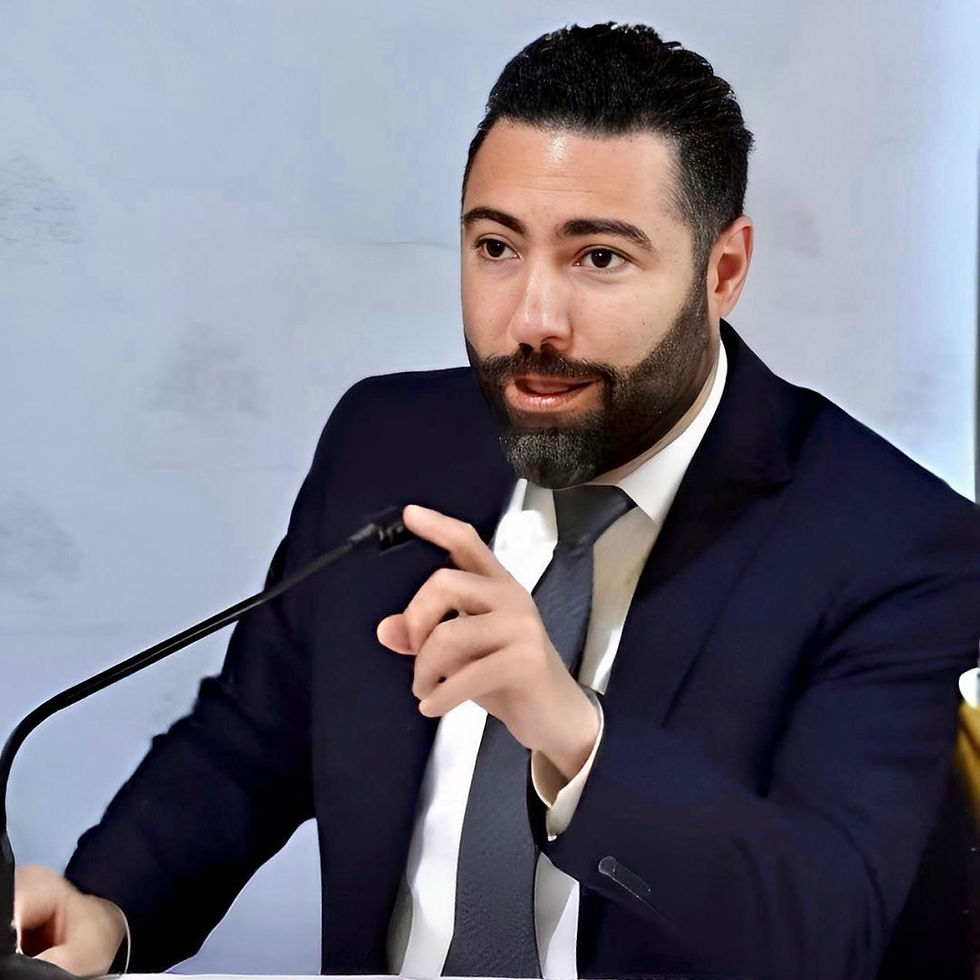
Tony Boulos is a Lebanese journalist and political analyst specializing in Middle East security and geopolitics. A frequent commentator on Arab and international TV, he provides expert insights into the region’s complex landscape. Boulos is a regular ME24 contributor, delivering strategic analysis on the most pressing issues in the Middle East.


Comments